
End-to-End Warehouse Automation: Connecting the Dots Across the Supply Chain
The Next Challenge: Orchestrating Automation Technologies and People
A package delivered to a consumer’s doorstep may pass through dozens of systems before it leaves a warehouse: inventory arrives at the dock, is unloaded, stored, replenished, picked, packed, verified, palletized, and shipped. Today, many of these process steps can already be automated. Robots unload containers, autonomous vehicles transport inventory, automated systems retrieve products within seconds, and AI increasingly supports along processes from quality control to operational optimization.
As automation expands, warehouses are becoming faster, more scalable, and more resilient. But they are also becoming more complex. Every new technology adds interfaces, dependencies, and data flows that need to be managed. As a result, operational performance increasingly depends not on individual technologies, but on how effectively they are connected.
This is changing the conversation around warehouse automation. The challenge is no longer automating individual process steps. It is creating a seamless flow from inbound to outbound. At Arvato, we see this shift every day. As automation, robotics, and AI become increasingly embedded in our operations, success depends less on deploying individual technologies and more on orchestrating them as part of one connected operating environment.
From Automated Processes to Automated Environments
For years, automation focused on optimizing individual warehouse activities such as storage, transportation, and picking. These technologies delivered significant gains in productivity, throughput, and service quality. However, improving individual processes does not automatically improve the overall operation. A fast picking process creates little value if inventory replenishment, packing, or shipping cannot keep pace.
As warehouses become more automated, the greatest inefficiencies often occur at the interfaces between systems rather than within them. This is why end-to-end automation is becoming increasingly important. The goal is not to optimize individual process steps, but to create a seamless flow of goods across the entire operation. For clients, this translates into tangible business benefits: faster throughput times, greater scalability during peak periods, improved reliability, and the flexibility to adapt to changing demand without compromising service quality.
End-to-End Starts at Inbound
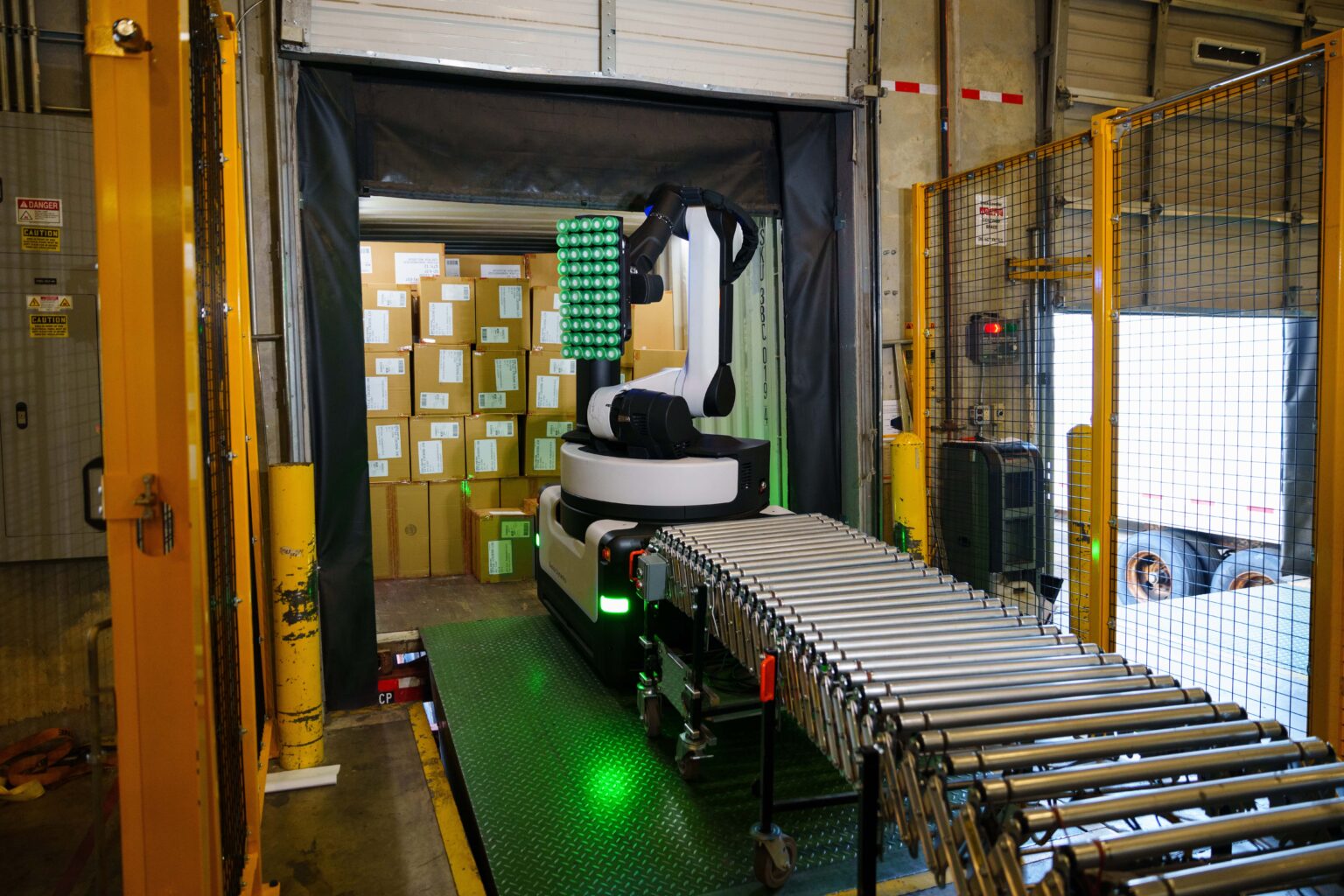
Creating a seamless flow of goods starts long before an order is picked. Inbound logistics remains one of the most labor-intensive areas of warehouse operations. Unloading loose cartons from trucks and containers, often weighing up to 25 kilograms, is physically demanding, repetitive, and increasingly difficult to staff consistently.
This is where robotics can create immediate value. Across Arvato’s operations, robotics solutions are being integrated to automate container and truck unloading as part of a broader end-to-end automation environment. By taking over physically demanding tasks at the very beginning of the material flow, robotics help reduce strain on employees while creating a more stable and predictable flow into downstream processes.
The value of inbound automation therefore extends far beyond unloading. While the industry often focuses on the last mile, the first mile inside the warehouse is equally critical. Every downstream process depends on how efficiently goods enter the operation. By creating a stable and predictable inbound flow, automation helps unlock higher performance across storage, fulfillment and outbound logistics.
Connecting Storage, Fulfillment and Outbound
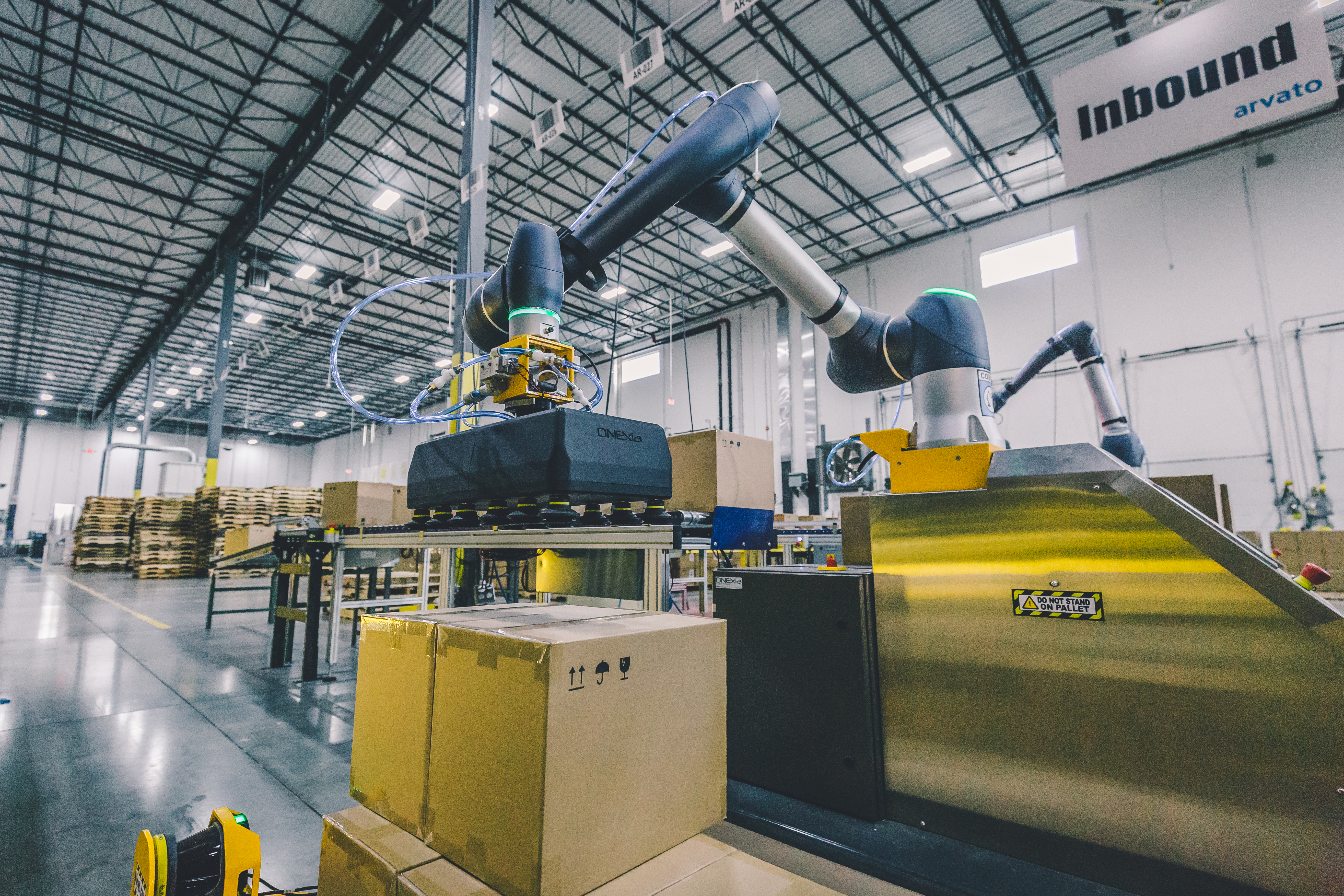
Once inventory enters the warehouse, it moves through a combination of storage systems, fulfillment processes, robotics applications, and outbound operations. The objective is not to maximize the performance of individual technologies, but to optimize the movement of goods across the entire operation. At Arvato, we increasingly connect technologies such as AutoStore, robotic picking solutions, and advanced palletizing applications to reduce handovers, improve throughput, and increase operational flexibility.
One example is the integration of an AutoStore system and robotics solutions, where inventory can move more seamlessly between storage and fulfillment processes. Similar developments are taking place in outbound operations, where automation is expanding into increasingly complex activities such as mixed-carton palletizing.
These examples illustrate a broader shift: automation is moving beyond isolated use cases and becoming part of a connected operational environment.


Orchestrating Automation at Scale
As automation and robotics continue to scale, managing complexity becomes just as important as deploying technology. At Arvato, robotics already supports operations across our global network. Our ambition is to scale this to 10,000 robotics deployments by 2030. Reaching this scale is not simply a question of deploying more technologies. It requires the ability to connect systems, harmonize processes, and manage increasingly complex automation environments while maintaining operational flexibility and performance.
Software plays a critical role in this effort. Warehouse Control Systems, fleet management platforms, and AI-powered optimization tools act as the orchestration layer that connects automation and robotics technologies. Their role is to synchronize material flows, create transparency, and help operations perform as one coordinated environment. Arvato's self-developed Warehouse Management System plays an important role in providing visibility and control across automation technologies. At the same time, solutions such as agnostic fleet management systems help coordinate different robotics technologies, ensuring that multiple systems work together as part of one connected operation rather than separate automation islands.
However, scaling automation is not only about technology. It also requires investing in people. Employees need the skills to operate, monitor, maintain, and continuously improve increasingly automated environments. Building expertise through training, clear ownership models, and dedicated automation capabilities therefore becomes just as important as implementing the technologies themselves.
Looking Ahead: The Future Is End-to-End
As automation continues to scale across our operations, the ability to connect people, robotics, AI, and software into one coordinated environment becomes a key differentiator.
For clients, end-to-end automation delivers tangible benefits:
- Greater supply chain resilience
- Faster scalability during growth and peak periods
- Higher operational flexibility
- Improved speed and service quality
- Greater visibility and control
Ultimately, the future of warehouse automation is not defined by individual technologies, but by the ability to orchestrate them into one seamless end-to-end flow that delivers measurable business value.


