
Logistics Automation with Purpose: How Arvato turns AI and robotics into real operational impact
Building Scalable and Resilient Supply Chains with Automation, Robotics and AI
Volatile demand, rising end customer expectations and persistent labor shortages and ongoing global crises are putting global supply chains under pressure. Speed, resilience and transparency have become baseline requirements.
For companies, this means that operational excellence has become a direct driver of growth, customer loyalty and competitiveness. This is exactly where Arvato comes in. We use automation, robotics and artificial intelligence (AI) in logistics in a targeted way to build scalable and resilient supply chains. Our focus is not on deploying technology in isolation, but on orchestrating solutions across the entire operation to create measurable value for clients.
-

Automation is a structural response to rising costs and ongoing labor shortages. Value comes from orchestrating solutions across the entire operation.
Philipp Rücker Head of Logistics Engineering & Transport Management

Automation as Response to Volatile Markets
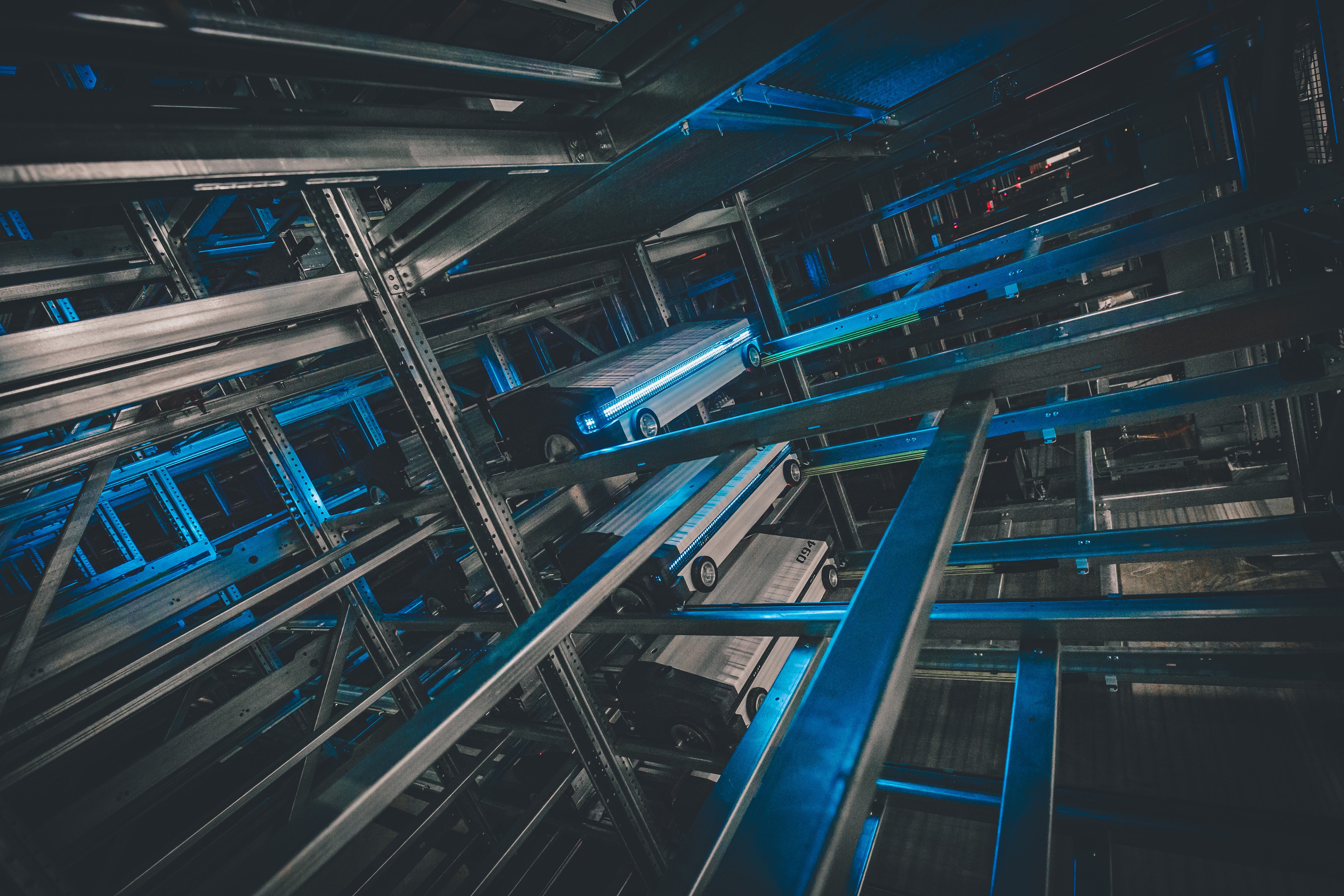
Market dynamics have fundamentally changed. Volumes fluctuate more sharply, peaks demand is more extreme, and end customers expect maximum speed combined with accuracy in service and delivery. These demands can no longer be met with traditional, purely manual processes. Automation has become essential to ensure scalability, service levels and cost efficiency. Goods-to-person systems are a key example, reducing walking distances while increasing process speed.
“Employees no longer have to walk several kilometers through the warehouse every day. The goods come to them,” explains Philipp Rücker. “That relieves teams and at the same time shortens throughput times, especially in e-commerce.” For our clients, this means faster order cycle time, more stable processes, and better planning reliability.
Robotics becomes operationally scalable
While automation is already well established, logistics robotics is now reaching a turning point. Advances in AI and image processing make it possible to deploy robots in highly variable logistics environments. Unlike in industries such as automotive, where robots have long been used in stable, repetitive processes, logistics is characterized by constant variability. Products differ in size, shape and material, and processes change continuously, for example during the season businesses in fashion logistics throughout the year.
“Only AI makes it possible for robots to handle this level of complexity,” says Philipp Rücker. The decisive factor is not the individual robot, but the ability to deploy solutions reliably in real operations and scale them quickly.

End-to-end automation: Performance across the entire supply chain
Arvato focuses on end-to-end automation, orchestrating entire value streams instead of individual steps.
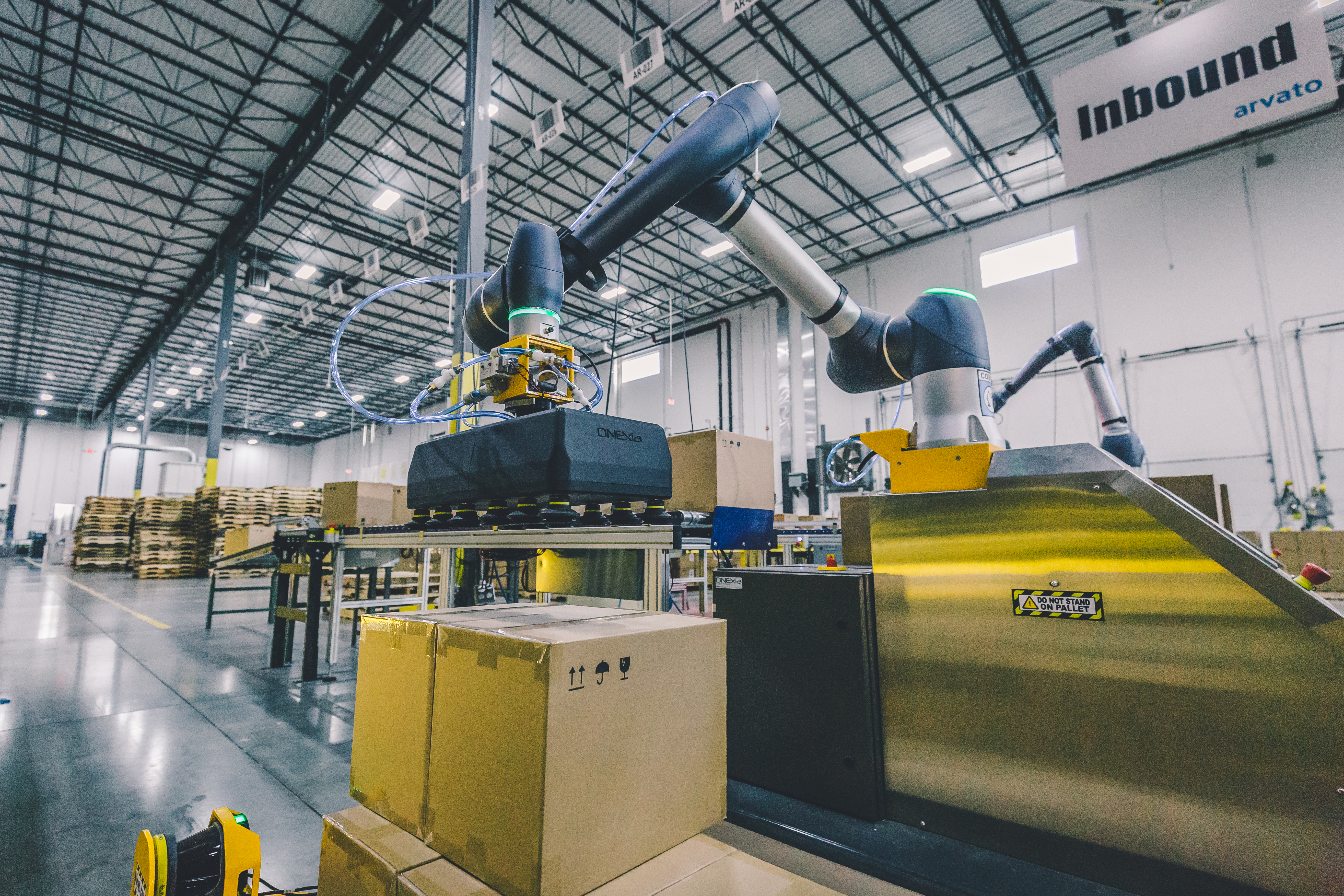
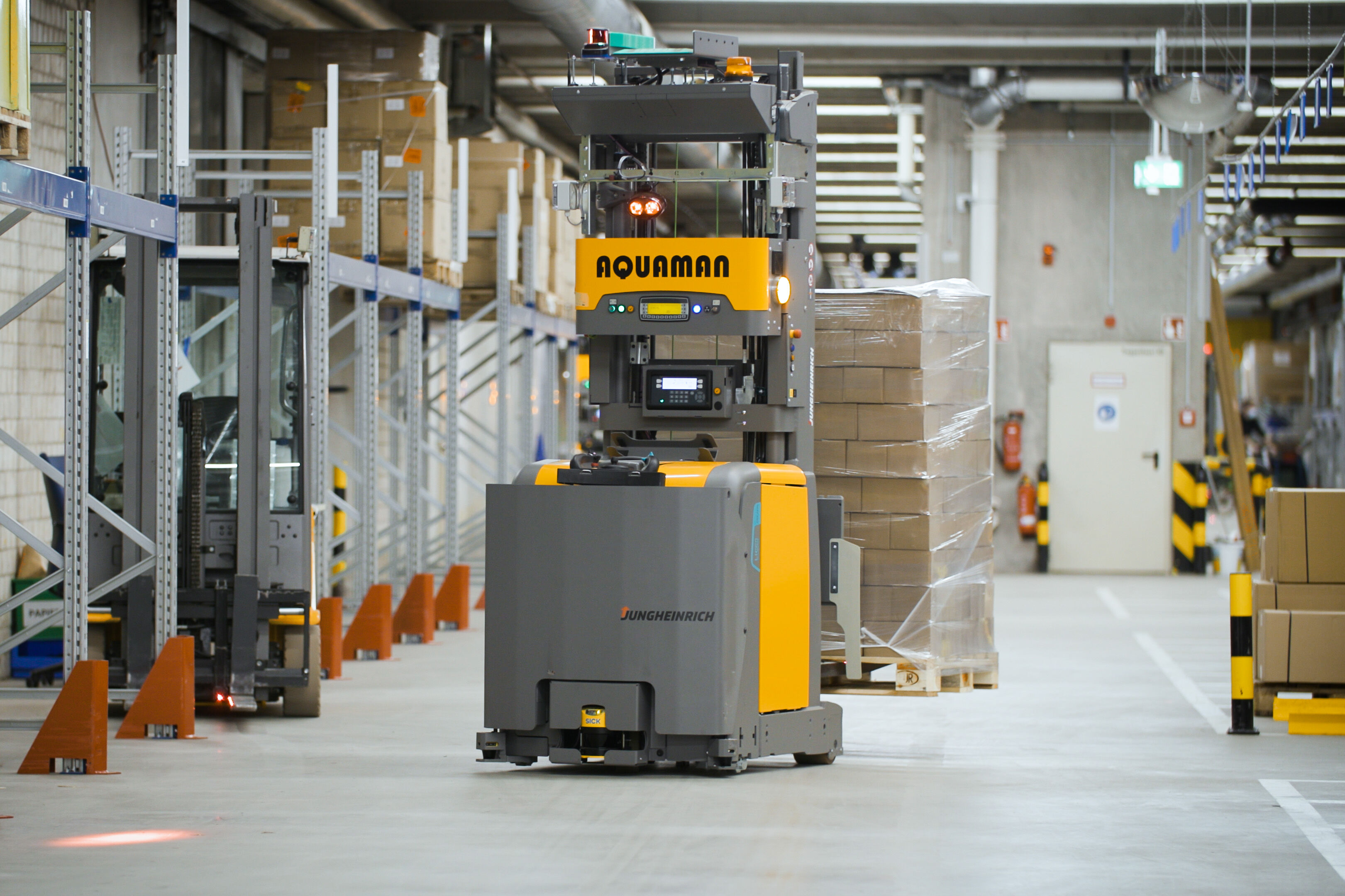
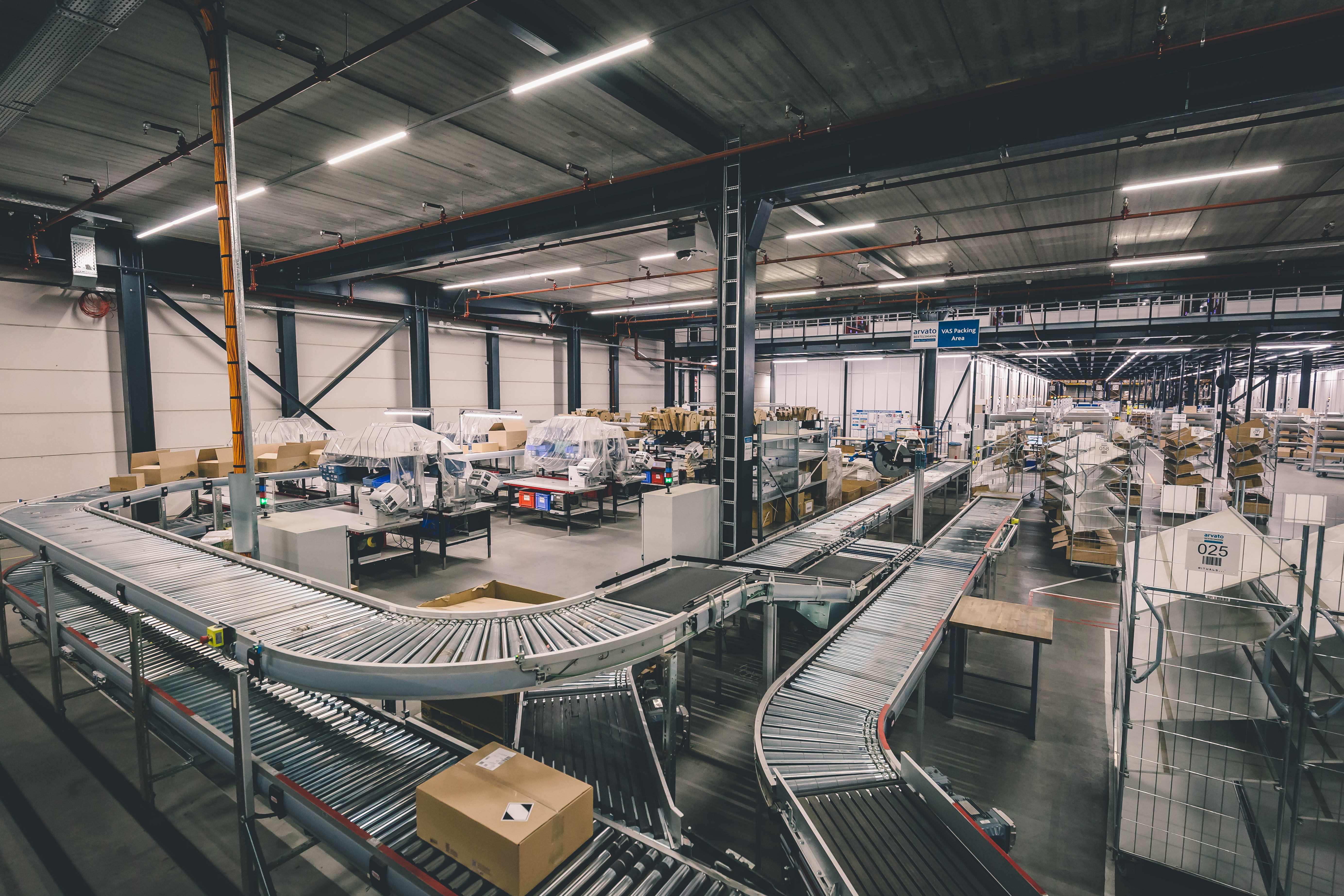
In inbound logistics, robots unload containers, scan goods and transfer them to automated conveyor systems. At the end of the process, palletizing is also automated, while autonomous mobile robots handle transport within the warehouse. The result is consistently stable processes, shorter throughput times and significant relief for employees, especially in monotonous and physically demanding tasks.
Clear benefits apply to picking. Modern robotic warehouse solutions already achieve productivity levels comparable to human workers and ensure consistent quality. “Repetitive tasks can be automated very effectively. That reduces error rates and at the same time creates more room for our employees,” explains Philipp Rücker. For clients, this means greater process stability, lower costs thanks to fewer errors, and better scalability during peak periods.




Managing complexity: AI makes the difference
As automation increases, so does complexity. The challenge is to connect different automation solutions. Arvato addresses this complexity through integrated control of all systems. “With our Warehouse Control System, we connect almost all technologies in the warehouse and manage them centrally,” explains Philipp Rücker. “That gives us transparency across all processes and allows us to respond more quickly to change.”
The goal is a fully orchestrated system landscape where automation, robotics, AI and people work together seamlessly. AI creates its greatest impact in this context. It connects systems, analyzes large volumes of data and enables dynamic process control. This improves planning, resource utilization and quality assurance. In practice, this leads to measurable results. At our automated logistics site in Hamm for example, the contents of every parcel are automatically checked by camera before shipping and matched with order data in real time. As a result, error rates are almost eliminated which has a direct impact on customer satisfaction and return rates.
The use of digital twins, virtual replicas of our warehouses, also makes it possible to test changes to warehouse structures before implementation. This saves time and money. Improvement opportunities can be identified early, and adjustments can be made without risk. For our clients, this means fewer interfaces, greater transparency, and a supply chain that remain high performing even under dynamic conditions.
A key success factor is the ability not only to test solutions and deploy them selectively, but to roll them out globally. Instead of isolated point solutions, Arvato relies on standardized, scalable implementation models. Partnerships with selected automation partners in the area of Robotics and Goods-to-Person help us to rollout our automation solutions and ensure fast implementation with our inhouse Warehouse Control System.
The Economics of Automation in Logistics
At the same time, the economics of automation have changed fundamentally. Standardized, modular automation solutions are increasingly replacing complex one-off projects. This reduces implementation times and lowers investment risk. For companies, this means faster time to value, lower barriers to entry, and greater flexibility as requirements change.
One thing remains clear: not every process can be automated economically. Individual value-added services or highly complex manual tasks will remain in human hands. Arvato therefore focuses on on hybrid logistics models that combine human expertise with automation. This balance delivers both efficiency and the flexibility required in volatile markets.
Conclusion: Orchestration as the key to competitive advantage
The future of logistics will not be shaped by individual technologies, but by how well they are orchestrated across the entire operation.
Arvato designs and runs systems in which automation, robotics and AI work together seamlessly. Our role is to orchestrate technologies, processes and people that deliver consistent performance. The goal is clear: to create supply chains that are not only efficient, but resilient, scalable and competitive.
As Philipp Rücker puts it: “Automation and robotics are not an end in itself, but a strategic instrument. It is not about automating as much as possible, it is about designing the best solution for our clients and creating real competitive advantage.”


