
Why Peak Season is the best Proof for Perfect Preparation
Peak season is when supply chains are put to the ultimate test. But for us, it is more than just the busiest time of the year. It is the moment when months of preparation, operational experience and strong teamwork come together and deliver performance. And that is exactly why we love it.
Black Friday may be the most visible moment of peak season, but the work behind a successful peak starts much earlier. Especially in fashion logistics, the challenge is not simply to process more orders. It is to manage a rapidly changing mix of volumes, products, channels and consumer expectations while maintaining the same level of speed, availability and quality.
As Axel Mayer, President Lifestyle Fashion & Sports at Arvato, explains: “Peak season is often viewed as a logistical stress test. But it is not simply an event to be endured. It is the period when the true strength of a supply chain becomes visible.”
The real challenge is complexity
Modern logistics networks are designed to handle significant volumes. During peak season, however, almost every variable can change at the same time. Collections change. Marketing campaigns can influence demand within hours. Individual products suddenly become bestsellers, while demand for others remains below expectations. At the same time, consumers expect delivery speed and product availability to remain at the same high level they are used to throughout the year. That makes flexibility one of the defining capabilities of a successful peak operation.
“The difference between an average and a successful peak season is therefore not capacity alone. It is the ability to respond to change without compromising service quality.” says Axel Mayer.


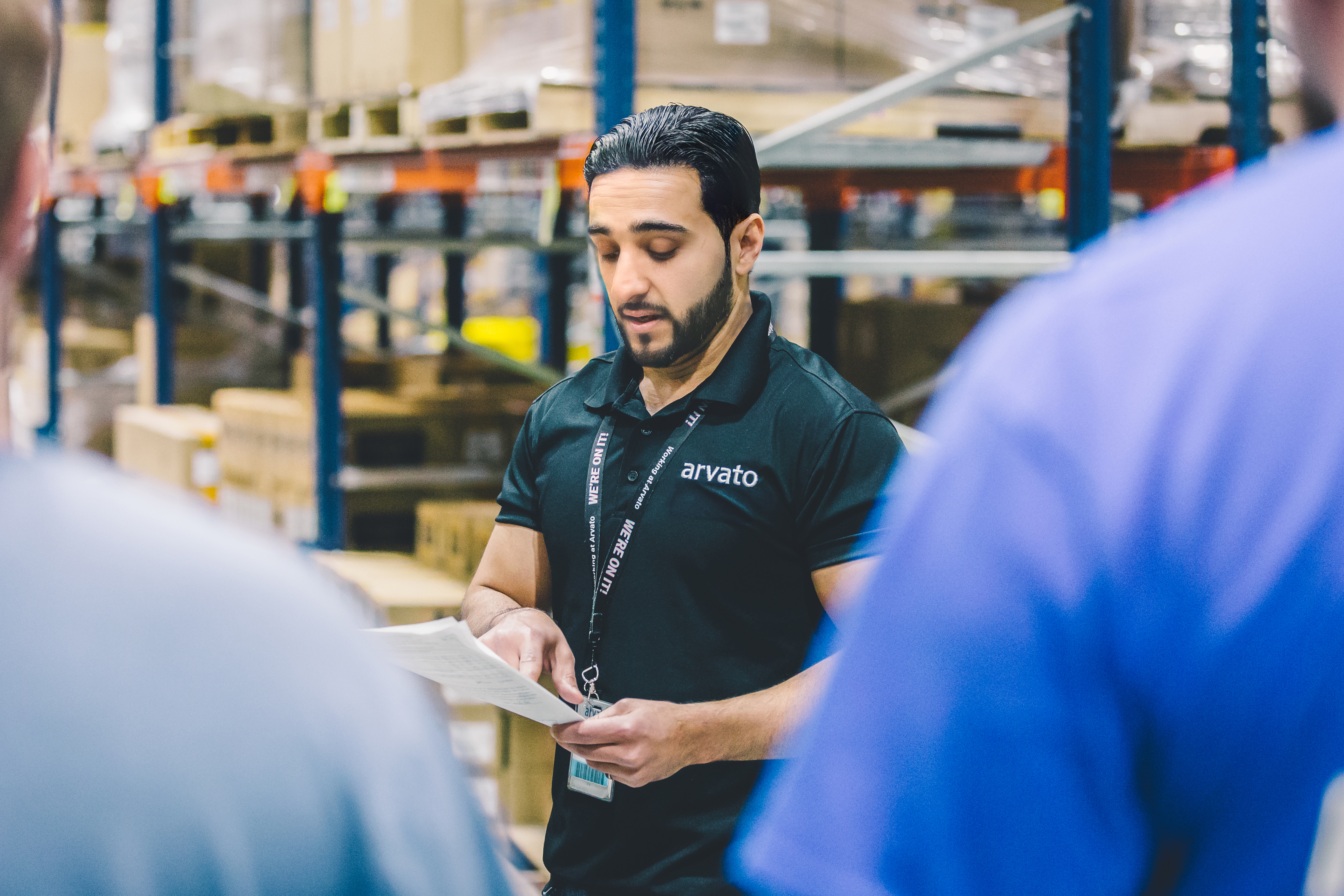


Peak Season Preparation starts months before the first order
The weeks around Black Friday may receive most of the attention, but preparation begins months earlier.
Historical sales data, planned promotions and expected demand patterns form the basis for different scenarios. Warehouse and transportation capacities need to be aligned accordingly, while IT systems and operational processes have to be ready for significantly higher activity.
And because no forecast will perfectly predict reality, these plans cannot remain static. Axel Mayer explains: “Successful organizations are not defined by their ability to predict every order with absolute accuracy. Rather, they build operating models that continue to perform even when demand develops differently than expected. Today, flexibility is just as important as forecasting accuracy.”
This preparation is an important part of what makes peak season special for our teams. The objective is not simply to survive a few exceptionally busy weeks. It is to anticipate challenges, test solutions and create the flexibility needed when reality inevitably differs from the plan.

Technology and people performing together
Automation has fundamentally changed fashion logistics. It enables highly productive, scalable operations and helps manage peaks that would otherwise be difficult to handle. But peak season also demonstrates why technology alone is not enough.
Fashion logistics combines standardized processes with an extraordinary number of exceptions: sizes, colors, fits, delicate materials, hanging garments, personalization and returns all create situations in which experience and judgment remain essential. Technology can handle standardized processes with maximum efficiency. People provide flexibility, contextual understanding and quality awareness. Peak season is where both need to perform together seamlessly.
One inventory, multiple channels
Omnichannel adds another dimension to peak season complexity. The same inventory may need to serve physical stores, e-commerce and marketplaces at the same time, each with different requirements for availability, allocation and speed. Transparency therefore becomes crucial. Operations need visibility into where inventory is located, where demand is developing and which channels need to be prioritized.
At the same time, omnichannel models can help spread peak activity across a longer period. Retail and wholesale deliveries often begin ahead of Black Friday, creating additional opportunities to scale operations and onboard seasonal employees before e-commerce volumes reach their highest levels.
-

The most successful peak season operations are not necessarily the most automated. They are the best orchestrated.
Axel Mayer President Lifestyle Fashion & Sports at Arvato

Peak season continues after Christmas
For fashion brands, the story does not end when the last Christmas parcel leaves the warehouse. Returns are an integral part of the season. The challenge is to inspect returned products, protect product quality and make saleable items available again as quickly as possible. Speed matters because every additional day can reduce the commercial value of an item. But speed cannot come at the expense of quality. As a result, returns processing quality has become just as important as speed. Companies that can inspect, refurbish, and reintegrate products into inventory quickly and carefully gain a clear competitive advantage.
No peak season is exactly like the one before it. Consumer behavior changes. New channels emerge. Marketing campaigns create unexpected demand patterns. And external developments can challenge even the best forecasts. That uncertainty is precisely what makes peak season such a defining moment in logistics.
It brings together months of preparation, technology, data, operational expertise and, above all, people. It creates pressure, but also energy. And it makes visible what a resilient supply chain can really achieve when every part of the operation works together.
As Axel Mayer puts it: “That is what makes peak season so fascinating. It reveals which supply chains are truly resilient. And it demonstrates that operational excellence is not created during the highest-revenue weeks of the year, but during the months of preparation beforehand.”
Peak season may reach its climax in November and December. But winning it starts much earlier. And for our teams, that is part of what makes it one of the most exciting times of the year.


